
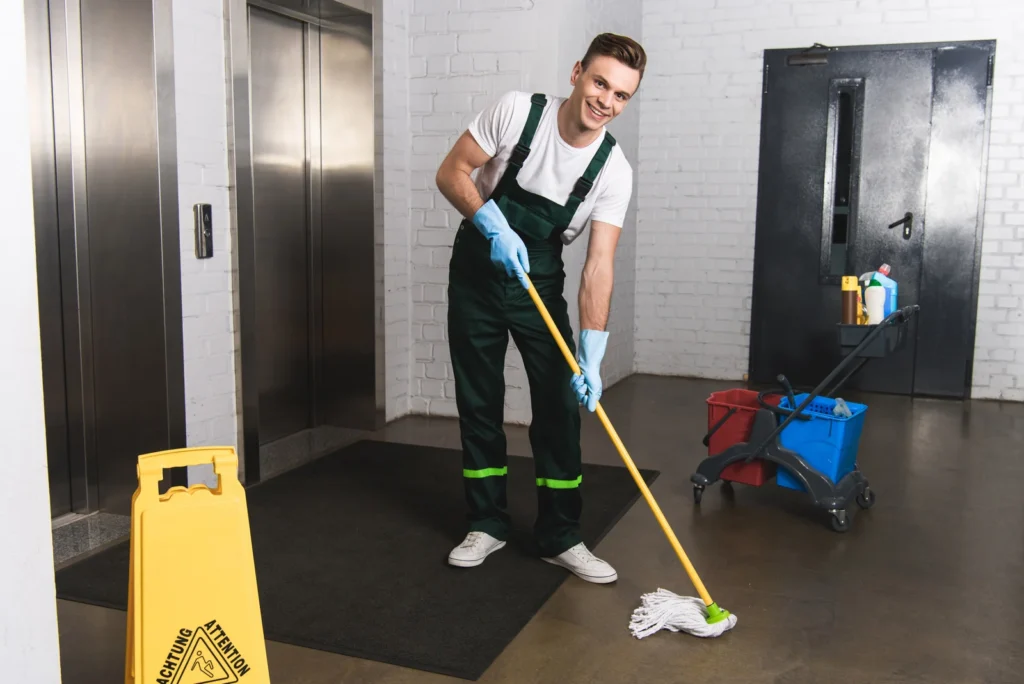
Fall changes more than the weather in Surrey. As temperatures drop, rain becomes more frequent, daylight hours get shorter, and employees spend more time indoors, workplaces can start accumulating dirt, moisture, and clutter faster than they did during the summer.
For Surrey businesses, this is a good time to review whether the existing cleaning routine still matches the demands of the season. A schedule that worked well during dry summer months may need more attention to entrances, floors, washrooms, high-touch surfaces, and indoor air quality once fall arrives.
A practical seasonal adjustment does not necessarily mean cleaning everything more often. It means putting more attention where fall conditions create the greatest cleaning challenges.
1. Give Entrances More Attention
The entrance is usually the first part of a commercial property to show the effects of fall weather.
Rain, wet leaves, mud, and moisture can quickly be tracked inside by employees, customers, and visitors. This can make floors look dirty while also increasing the risk of slips.
Businesses can adapt by:
- Increasing entrance and lobby inspections during wet weather
- Keeping entrance mats clean and properly positioned
- Removing leaves and debris before they are carried indoors
- Paying closer attention to wet spots around doorways
- Cleaning entry floors before dirt spreads into other areas
For high-traffic businesses, entrance cleaning may need to become a priority several times throughout the day rather than being treated as a once-a-day task.
2. Adjust Floor-Care Routines for Rainy Weather
Fall puts additional pressure on commercial flooring. Water, grit, and outdoor debris can be transported inside repeatedly, especially in offices, retail spaces, restaurants, clinics, and other busy facilities.
Instead of relying on the same summer floor-cleaning schedule, businesses should consider the type of flooring they have and how much foot traffic it receives.
Hard floors may require more frequent mopping and spot cleaning, while carpeted areas can benefit from regular vacuuming to prevent dirt from becoming embedded.
A professional cleaning routine should also distinguish between routine maintenance and deeper floor care. This helps prevent small amounts of seasonal dirt from becoming a larger maintenance issue.
3. Review High-Touch Surface Cleaning
As people spend more time indoors, frequently touched surfaces deserve consistent attention.
Door handles, elevator buttons, light switches, shared equipment, reception counters, break-room surfaces, and other commonly touched areas can quickly become overlooked during a busy workday.
Rather than simply adding more cleaning tasks, businesses should identify the surfaces that receive the most traffic and build them into the regular cleaning schedule.
This approach makes the routine more targeted and easier for staff or professional cleaners to follow.
4. Do Not Ignore Break Rooms and Kitchens
Fall often means employees are spending more time inside during breaks and lunch periods. Shared kitchens and break rooms can therefore require more consistent cleaning.
Particular attention should be given to:
- Countertops and tables
- Sink areas and faucets
- Refrigerator handles
- Microwave handles and buttons
- Cabinet handles
- Floors around food-preparation areas
- Waste and recycling containers
These spaces can quickly develop odours and buildup when food residue, moisture, and waste are not managed consistently.
A good fall cleaning routine should treat shared staff areas as high-use spaces rather than secondary areas of the workplace.
5. Make Washroom Inspections More Consistent
Washrooms can experience increased use as employees and customers spend more time indoors. A cleaning routine should account for both traffic volume and the size of the facility.
Regular checks can help businesses identify issues before they become noticeable to customers or employees. Supplies should also be monitored so that soap, paper products, and other essentials do not run out unexpectedly.
For larger workplaces, scheduled inspections throughout the day can complement the main cleaning service and help maintain consistent standards.
6. Look Beyond What Employees Can See
A workplace can appear clean while still having areas that are being missed.
Fall is a useful time to review less-visible cleaning points such as:
- Behind and underneath furniture
- Baseboards and corners
- Vent covers
- High ledges
- Interior glass
- Door frames
- Storage areas
- Hard-to-reach surfaces
These areas may not require daily cleaning, but they should have a place in a periodic deep-cleaning schedule.
This is one reason many Surrey businesses benefit from reviewing their cleaning plan seasonally instead of using exactly the same checklist throughout the year.
7. Consider How Your Business Actually Uses Its Space
There is no single fall cleaning routine that works for every Surrey business.
An office with a small team has different requirements from a retail store with constant customer traffic. A medical or professional facility may have different cleaning priorities from a warehouse or property management office.
Before changing the schedule, businesses should consider:
- Daily foot traffic
- Number of employees
- Customer-facing areas
- Flooring types
- Shared spaces
- Operating hours
- Washroom usage
- Seasonal weather exposure
This allows cleaning frequency to be based on actual use rather than assumptions.
8. Know When Your Existing Routine Is No Longer Enough
One common sign that a cleaning schedule needs adjustment is when employees start noticing problems between scheduled services.
Persistent floor marks, dusty surfaces, overflowing bins, unpleasant odours, dirty entrances, or frequently missed areas can indicate that the current routine is not keeping up with workplace activity.
Instead of simply asking employees to clean more, businesses can review the entire cleaning plan and determine whether the frequency, scope, or method needs to change.
A professional commercial cleaning service Surrey can also help identify areas that require more attention during the fall and winter months.
What Should Surrey Businesses Change First?
For most workplaces, the biggest seasonal priorities are moisture control, entrance maintenance, floor care, high-touch surfaces, washrooms, and shared areas.
The goal is not to create an unnecessarily complicated cleaning schedule. It is to make the existing routine more responsive to the conditions inside and outside the workplace.
For businesses searching for professional cleaning services Surrey, the right approach is to look for a cleaning plan that can adapt to the property’s traffic, layout, and seasonal requirements.
How a Professional Cleaning Routine Can Help
A reliable cleaning schedule can make it easier for businesses to maintain consistent workplace standards without relying on employees to handle cleaning tasks between their regular responsibilities.
A professional cleaning company Surrey can work around business hours, focus on high-use areas, and incorporate seasonal priorities into an established cleaning plan. This can be particularly useful for workplaces that experience heavy foot traffic or have multiple shared spaces.
If your current routine was designed for summer conditions, fall is a good opportunity to review what is working, what is being missed, and where cleaning frequency needs to change.
Keep Your Surrey Workplace Ready for the Season
Fall cleaning is not about adding unnecessary tasks. It is about adjusting priorities before rain, foot traffic, and increased indoor activity make workplace maintenance more difficult. Contact Miss Milly Cleaning Services for help Surrey businesses maintain a consistent, practical cleaning routine designed around their workplace and seasonal needs.
Frequently Asked Questions
How often should a Surrey business clean its floors in the fall?
It depends on foot traffic, flooring type, and exposure to rain and outdoor debris. High-traffic businesses may need more frequent floor maintenance during wet weather, while lower-traffic offices may require fewer interventions.
Why do commercial floors get dirtier during fall?
Rain, mud, leaves, and grit can be carried indoors through entrances. Without effective mats and regular cleaning, this debris can spread across the workplace and become embedded in flooring.
Should businesses increase cleaning frequency during fall?
Not necessarily everywhere. It is usually more effective to increase attention to high-traffic and high-use areas, such as entrances, floors, washrooms, break rooms, and frequently touched surfaces.
What areas are commonly overlooked during commercial cleaning?
Less-visible areas such as baseboards, door frames, corners, high ledges, areas behind furniture, storage spaces, and vent covers can easily be missed during routine cleaning. These can be included in periodic deep-cleaning services.
When should a Surrey business consider hiring professional cleaners?
If employees are regularly spending work time on cleaning, important areas are being missed, or the workplace becomes difficult to maintain between scheduled cleanings, it may be time to consider professional service. A customized cleaning schedule can be built around the property's needs and operating hours.
