
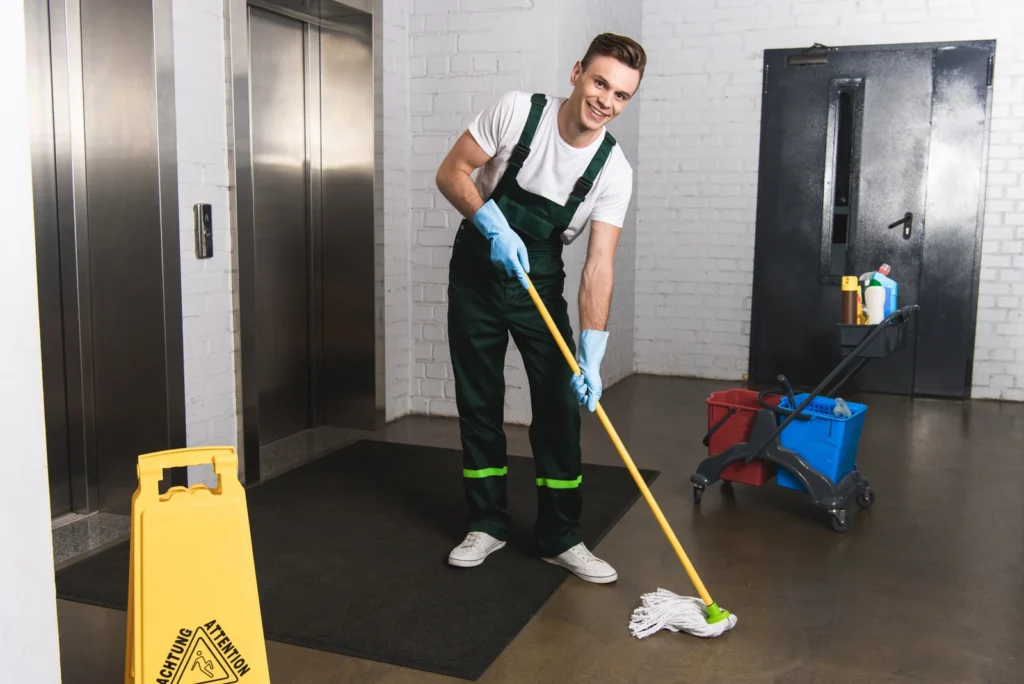
Quick Answer: Commercial construction cleaning in Langley prepares newly built or renovated properties for safe, clean, and professional occupancy. It typically includes removing construction dust, cleaning floors, sanitizing washrooms, detailing windows, wiping surfaces, clearing leftover debris, and checking high-touch areas. The exact cleaning scope depends on the building type, construction work completed, and handover requirements.
Completing construction is only one part of preparing a commercial property for business operations. Even after contractors finish their work, fine dust, adhesive residue, packaging materials, paint marks, and other construction-related mess can remain throughout the building.
For Langley business owners, developers, and property managers, professional post-construction cleaning helps transform a newly completed space into an environment that is ready for employees, customers, tenants, and visitors.
Understanding what this cleaning process involves also makes it easier to coordinate the final stages of a commercial construction or renovation project.
1. Removal of Construction Dust and Remaining Debris
Construction dust can settle across almost every surface, including floors, windowsills, shelving, vents, counters, and fixtures. Even when a building appears clean at first glance, fine particles may remain in less visible areas.
The first stage of construction cleaning focuses on removing leftover materials and accumulated dust.
Typical tasks include:
- Collecting loose construction debris and packaging materials.
- Removing dust from counters, ledges, shelves, and accessible surfaces.
- Cleaning corners, edges, and areas around fixtures.
- Wiping doors, frames, and baseboards.
- Removing dust from accessible vents and other surfaces.
Proper dust removal is particularly important in commercial offices, retail units, and shared business spaces where cleanliness affects the first impression visitors receive.
2. Detailed Floor Cleaning for Different Commercial Surfaces
Commercial properties can have several flooring types, each requiring an appropriate cleaning method.
For example, a newly renovated retail unit may have vinyl flooring, while an office building may include carpeted rooms, tile, or polished concrete.
Professional cleaners assess the flooring material before selecting suitable cleaning products and equipment.
| Commercial Flooring | Typical Cleaning Requirements |
| Tile and grout | Remove dust, dirt, and construction residue |
| Vinyl flooring | Clean surface marks and remaining dust |
| Carpet | Vacuum construction dust and suitable debris |
| Polished concrete | Remove loose particles and surface dirt |
| Hardwood flooring | Use appropriate products to protect the finish |
Cleaning methods should always match the manufacturer’s recommendations and the condition of the flooring. Paint, adhesive, or grout residue may require specialized treatment rather than ordinary mopping.
3. Window, Glass, and Interior Fixture Cleaning
Newly constructed commercial spaces often contain glass partitions, storefront windows, interior doors, and decorative fixtures that collect dust and installation marks.
Cleaning these areas helps improve the overall appearance of the property before employees or customers enter.
This stage may include:
- Cleaning interior glass partitions and accessible windows.
- Removing fingerprints and surface smudges.
- Wiping window frames and sills.
- Cleaning light switches and accessible fixtures.
- Removing dust from doors, handles, and trim.
- Cleaning accessible shelving and built-in cabinetry.
For commercial retail spaces, clean storefront glass can also help create a more inviting appearance when the business opens.
Any paint, sealant, or adhesive removal should be performed using products and techniques suitable for the specific surface to avoid scratches or damage.
4. Kitchen, Breakroom, and Washroom Cleaning
Shared facilities require particular attention before a commercial property becomes operational.
Employees and visitors expect kitchens, breakrooms, and washrooms to be clean, functional, and ready for regular use.
Post-construction cleaning in these areas may include:
Kitchen and breakroom areas
- Wiping countertops and accessible cabinet surfaces.
- Cleaning sinks and faucets.
- Removing dust from appliances and exterior surfaces.
- Cleaning tables, chairs, and other accessible furniture.
- Removing construction residue from suitable surfaces.
Washrooms
- Cleaning toilets, sinks, and surrounding surfaces.
- Wiping mirrors, partitions, and fixtures.
- Cleaning floors and accessible corners.
- Sanitizing appropriate high-touch surfaces.
- Checking dispensers and visible fittings for cleanliness.
These spaces should receive a detailed final inspection because they will be used frequently once the building is occupied.
5. Cleaning Different Areas According to Their Commercial Use
Not every commercial property has the same cleaning requirements. A retail store, office, medical-adjacent workspace, and industrial facility may each require a different approach.
The cleaning plan should reflect how the building will be used after handover.
| Commercial Property Type | Important Cleaning Priorities |
| Office buildings | Workstations, meeting rooms, glass partitions, floors, and washrooms |
| Retail stores | Display areas, storefront glass, shelving, floors, and customer spaces |
| Commercial units | Entrances, shared surfaces, windows, and accessible fixtures |
| Restaurants and cafés | Suitable food-preparation surfaces, floors, counters, and washrooms |
| Industrial facilities | Accessible surfaces, office sections, floors, and site-specific cleaning requirements |
For example, a newly renovated office in Langley may need detailed cleaning of meeting rooms and workstations, while a retail unit may require additional attention to display shelving and customer-facing glass.
Some specialized environments may also require regulated cleaning or disinfection procedures beyond standard post-construction services.
6. Final Inspection Before Commercial Property Handover
A final inspection helps identify overlooked areas before employees, tenants, or customers begin using the property.
Rather than checking only the main entrance and visible floors, property managers should review the entire accessible space.
A practical final cleaning checklist includes:
- Construction dust has been removed from accessible surfaces.
- Floors have been cleaned using suitable methods.
- Windows and interior glass are free from visible marks.
- Washrooms and shared facilities have been cleaned.
- Kitchen and breakroom surfaces have been wiped.
- Doors, handles, switches, and fixtures have been detailed.
- Remaining packaging and loose debris have been removed.
- No obvious cleaning residue has been left behind.
This inspection also provides an opportunity to identify areas requiring additional attention before the property is officially handed over.
7. When Should Langley Businesses Schedule Commercial Construction Cleaning?
Timing can make a significant difference to the final cleaning results.
Scheduling detailed cleaning before all construction activities are finished may lead to repeated dust accumulation and unnecessary work.
A practical sequence is:
- Construction completion: Major building, installation, and finishing work should be substantially complete.
- Debris removal: Contractors should remove leftover building materials and construction waste.
- Initial cleaning: Cleaners remove accumulated dust and visible construction residue.
- Detailed cleaning: Floors, windows, washrooms, kitchens, fixtures, and other surfaces receive attention.
- Final touch-up: Remaining marks and dust are addressed before the occupancy or handover inspection.
Property managers should coordinate the schedule with contractors, cleaners, and other trades to avoid overlapping work.
How Can Businesses Choose the Right Commercial Cleaning Company?
Selecting an experienced cleaning provider is an important part of preparing a commercial property for occupancy.
Businesses should look for a company that understands the requirements of post-construction environments rather than relying only on standard office cleaning procedures.
Before choosing a provider, consider:
- Commercial experience: Ask about previous office, retail, and commercial property cleaning projects.
- Service scope: Confirm whether dust removal, floor cleaning, washroom detailing, and interior glass cleaning are included.
- Cleaning equipment: Check whether appropriate equipment and surface-specific products are available.
- Scheduling: Ensure the provider can coordinate with the construction and property handover timeline.
- Inspection process: Ask how completed work is reviewed and whether additional touch-ups can be arranged.
Businesses searching for construction cleaning should also consider whether the provider can support their ongoing maintenance requirements after occupancy.
For companies managing multiple commercial locations, working with a reliable cleaning provider can help maintain consistent standards across different properties. Businesses looking for commercial cleaning services should evaluate both immediate post-construction requirements and their longer-term cleaning needs.
A professional cleaning company Langley businesses can also approach for commercial cleaning support may be worth considering when managing properties or projects across nearby service areas.
Prepare Your Commercial Property for Its Next Stage
Completing construction does not automatically make a commercial building ready for occupancy. Dust removal, detailed surface cleaning, floor care, washroom preparation, and a final inspection all contribute to a cleaner and more presentable space.
Whether you are preparing a newly built office, renovating a retail unit, or coordinating a commercial property handover in Langley, having a clear cleaning plan can help prevent overlooked areas and unnecessary delays.
Contact Miss Milly Cleaning Services to discuss your commercial construction cleaning requirements and arrange professional cleaning support for your property.
Frequently Asked Questions
What is included in commercial construction cleaning in Langley?
It generally includes construction dust removal, debris collection, floor cleaning, window and glass detailing, washroom cleaning, kitchen and breakroom cleaning, and wiping accessible fixtures. The exact scope depends on the building and project requirements.
When should post-construction cleaning be scheduled?
Detailed cleaning should generally take place after major construction and finishing activities are complete and contractors have removed leftover building materials. A final touch-up can be scheduled before occupancy or property handover.
How is construction cleaning different from regular commercial cleaning?
Construction cleaning focuses on removing building-related dust, debris, paint marks, adhesive residue, and installation mess. Regular commercial cleaning focuses more on maintaining everyday workplace hygiene and cleanliness after a property is occupied.
Do commercial properties need more than one construction cleaning visit?
Some properties benefit from multiple cleaning stages. An initial cleaning removes heavier dust and debris, while detailed cleaning and final touch-ups address remaining surface marks and overlooked areas before handover.
Can a commercial cleaning company provide ongoing cleaning after construction?
Yes. Depending on the provider's services, businesses may arrange recurring office, retail, washroom, and common-area cleaning after the initial construction cleanup. This helps maintain the property's cleanliness once daily operations begin.
